Dairy Cow Isopods

This is a page dedicated to my isopod husbandry, specifically for the dairy cow morph of porcellio laevis isopods but can be used for similar species :) They are known as 'swift' woodlice because of their ability to... move swiftly! They are explorers that benefit from interesting terrarain and lots of flat surface to run around on.
- - - - cross-posted to Felix's page - - -There are lots of different pieces of information about dairy cows. Some people report them to be incredibly aggressive, and they are known to be aggressive towards other isopods - so should not be kept in a mixed colony. Other people describe them eating parts of a live lizard while it sheds, eating the skin off their fingers, eatings entire tarantulas alive. Others consider them completely harmless to most active predatory species of inverts. Other people consider them to be completely safe custodians but recommend keeping an eye on them with inverts. Other people say it depends on the size of the reptile, or that they cannot eat parts of reptiles at all.
I bought them quite early on, not fully understanding that while they are considered very effective and safe clean-up crew, that does not mean for all pets.
What do I know about them definitively? Dairy Cows are very active when established and confident, and the juveniles are particularly protein hungry. They are incredibly efficient and will devour anything I put down for them. Ensuring they have a regular source of protein and supplementary feeding in addition to burying feeder carcasses has worked without problem for me. But, I'd rather there was no risk at all to Felix, especially as he ages. And, I can still remove the fly carcasses and put them into the separate colony to be recycled. We know that some inverts like millipedes cannot be housed with procellio at all, for example. So, I am in the process of removing them as custodians and replacing them with another alternative which have a completely harmless nature to the spider. These characteristics though, make them absolutely perfect to keep in their own colony!
- - - - end of crosspost - - -So, what do you need to make these little critters happy?
Full disclosure: Things really add up. Go to a garage sale, thrift things when possible, TK Maxx... Do anything you want to keep costs down WITHOUT sacrificing the life quality of your isopods. They may not have much interest in communicating with us, and yes, they don't have as complex brain function, but they are yours, and it is your responsibility to take care of something dependant on you.

What do I need?
For beginners, bigger set-ups are actually recommended over smaller set-ups as it is easier to maintain a stable and correct environment for your isopods! If you forget to mist, or aren't adequately wetting the moss, then it can mean losing your entire colony. Smaller containers can also be easily grown out of by a fast-breeding colony.Desktop Jungle on Youtube has a video explaining how to set up an enclosure. I used it, along with some isopod feeding videos to supplement the articles I was reading about dairy cows from seller websites or vivipedia. I really like the way he explains aspects of husbandry and the depth he explores them. It feels appropriate.
Container + Tools:
-
➼ You can use standard clear bins from any hardware/homeware store. There are specific brands like Exoterra but they will be more expensive! Can be helpful to look on Reddit for posts from locals searching for same things on r/isopods. Budget aquarium tanks may be useful!!!
➼ As Porcellio are not a burrowing species, they do not need substrate which is as deep, so they're happy with MINIMUM 5cm - but, deeper substrate at 8-10cm will dry out less quickly and therefore be more easy to control.
➼ I personally miscalculated the gallon amount when buying a container (Exoterra Flat Large Faunarium), so it is possible to have a thriving isopod set-up, but much, much trickier. I've also had to add mesh to the existing vents + block off some as there was so much airflow that I was having to use too much distilled water to maintain moisture. I am still trying to figure out exactly how often I need to water, through how much of the substrate (moisture gradient having difficulty establishing, so watering at different levels in different parts). This isn't such a nightmare because my dairy cows are super hardy, but I could've made both our lives a LOT easier...


- ➼ Depending on the species you may/may not need cross-ventilation. Dairy cows are adaptable and tolerant, but it's important to have some kind of airflow. Cross ventilation (having vents at different sides of the enclosure) is good for preventing mould.
➼ More Ventilation does not always mean better - more airflow = faster loss of humidity and moisture. Significant loss of moisture within the substrate = dead colony.
For Heating, there's a couple of things that you can do. They generally need a temperature of 21-27 C, so when it's the cold winter nights of Scotland... well, they'll need some extra heating. Monitor your temperature fluctuations in your room during night, their temperature requirements don't just disappear with the sun. Unfortunately.
-
➼ This can be expensive. Now, if you look into British Thermal Units and choose an appropriately sized oil radiator, it will help bring down the costs. I'd only consider this if you want a 'warm room' in your house. Warm rooms can be helpful if you have multiple critters in one space + plants. Consider also: thermal curtains and other heat-trapping methods.
➼ I keep my room NOT at the temperature that my critters necessarily need, but warm enough so that the heat mat for my spider works without needing to heat up to a more dangerous temp. I also insulate around my enclosures with layers of bubble wrap, tin-foil, and cardboard.
➼ I find that keeping my isopod enclosure a bit closer to my radiator (not touching it, a bit of a distance away, sometimes I use a divider as well), works just fine. It is riskier than having a separate heat mat.
-
➼ It doesn't have to be a mat, it can also be a heat wire. I would generally advise against sticking it directly onto the side/bottom of the enclosure as an extra precaution. For my spider, I use a repurposed picture frame that has a sheet of glass in it that I stick the heat mat to.
➼ If using this, you MUST use a thermostat. It must be separate to the heat mat and must have a dial to control the temperature and a probe to measure the temperature. There are many different types of thermostats, I use a Microclimate Ministat 100. This is an 'on/off' thermostat which... switches the heat-map on and off to control the temperature.
➼ I do not know anything about heat bulbs, as you can't use them for your jumping spider.
Inside the Tank:
- ➼ Btw, you don't need every variation of the components! Please do pick and choose while making sure they have a nutritionally complete environment.
➼ You want everything to be pesticide free, so it is always safer to go organic/untreated. But use your discretion.
-
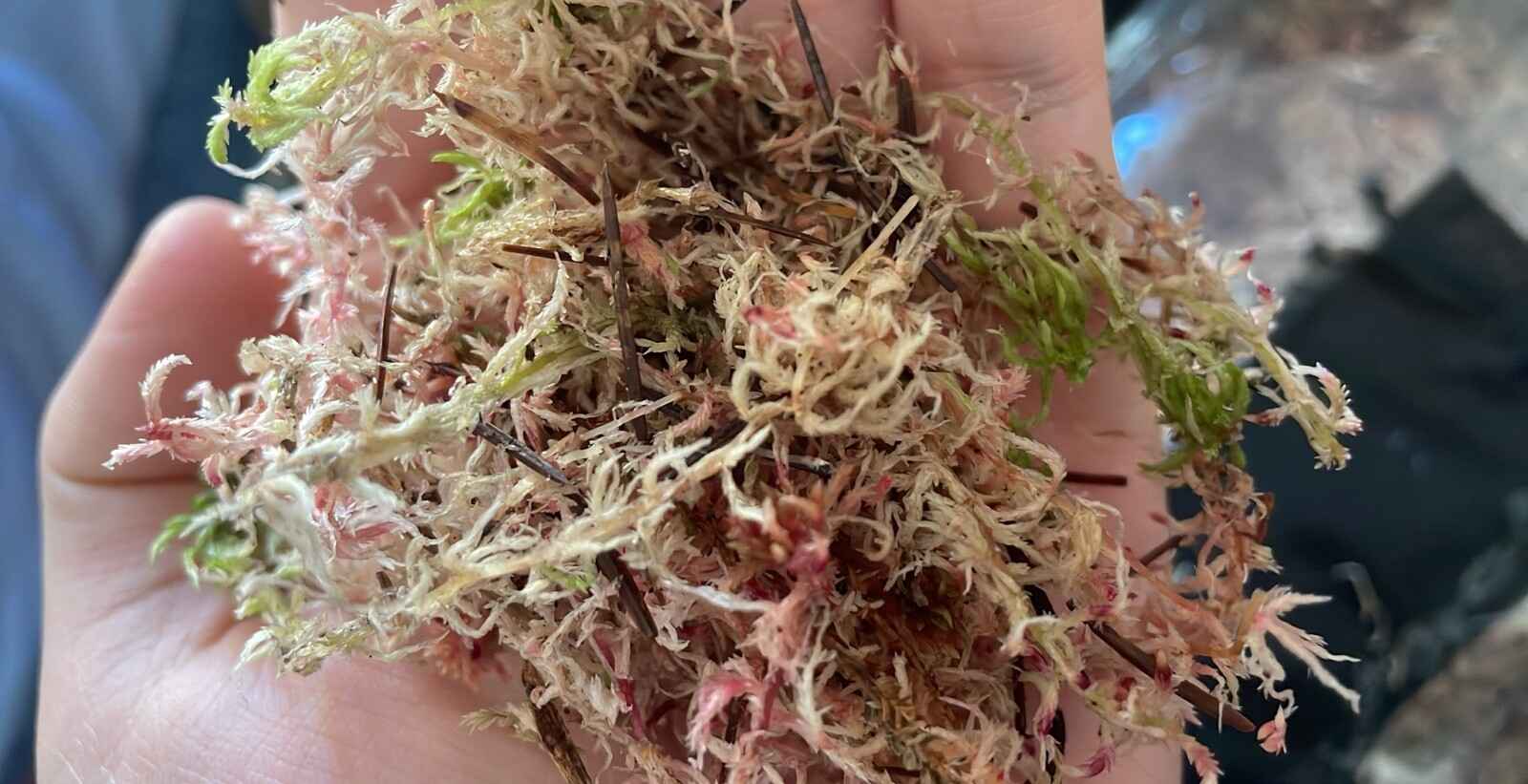
➼ This retains moisture within the substrate - I like to use live , as it will become greener/pinker in colour and looks nicer, but completely dried is fine too! It may even revive :)
➼ For the sake of the environment please AVOID peat moss, it is irreplaceable in the wild and harvesting destroys ecosystems and releases a lot of gases that speed up climate change.
➼ You could probably use other types of moss, but this is the most convenient, especially for mixing within other parts of the substrate.
-
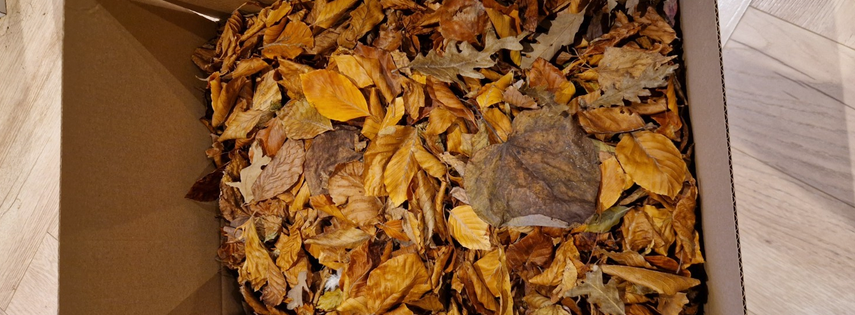
➼ This is a CRUCIAL part of their diet, and so should be widely available through and on top of the substrate as a layer. It also acts as hiding spots for the isopods. You CANNOT substitute this!
➼ This should be from Hardwoods and so should the other woods in their diet. Afaik soft woods and/or pine can be fine if you dry them out properly, but there's a lot of discussion about risks due to composition, nutrition etc.
-
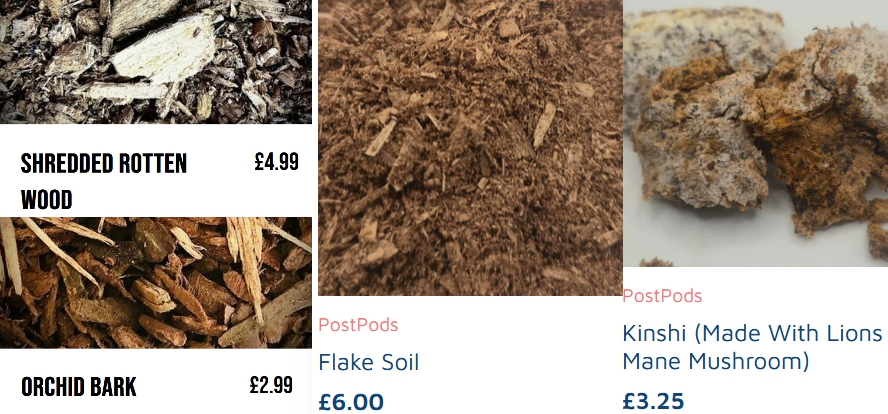
➼ I believe that this isn't necessarily essential like it is for millipedes, but there's also a lot of information saying it is? I would provide it so that the isopods have more of a variety in their diet.
➼ You can also use: Flake Soil (fermented oak wood originally for beetle rearing), Kinshi (hardwood 'rotted/partially digested' by adding a mycelium colony to it).
➼ You can use oak wood pellets or orchid bark, but those (like all wood ) needs to be rotted down before isopods can eat them. So, make sure your isopods already have plenty to eat so that it can have the time to rot :)
-
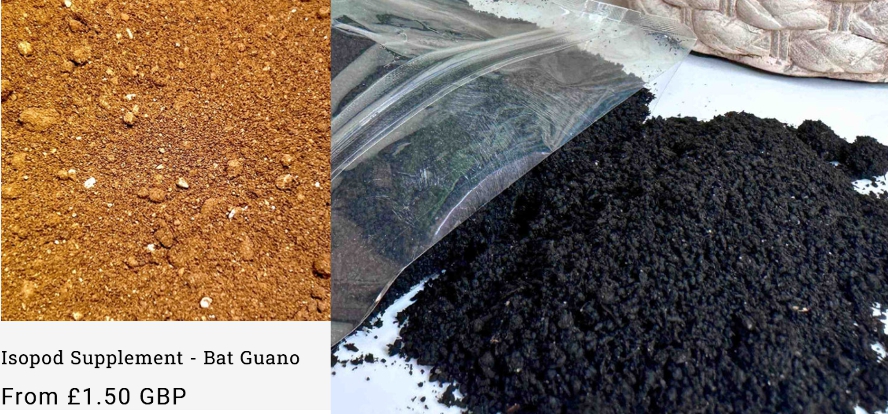
➼ Worm Castings - retains moisture, nutritional, can be bought at local plant store! Please try to support local businesses.
➼ Bat Guano - bat droppings, these are especially good for Cubaris, but works great for others too! Only issue is making sure you don't add too much as it's high in nitrogen and can build up. PostPods's description is best as it gives clear, specific instructions.
-
➼ Cuttlefish bone, Limestone, Bones, Crushed Eggshells, Calcium Powder...
➼ Some of these (cuttlefish bone - avians) have overlap with other pet-husbandry. Crushed eggshells are the most affordable + easy to get at home. If you are going to use bones, do some researcg about what kind of bones etc and get back to me!!
 Some isopods munching on some calcium...

-
➼ I know some people specify horticultural charcoal, and well, I bought my charcoal from a local plant shop so something to think about? If you have bought charcoal for non-plant related reasons.
-
➼ It's worth noting that there ARE pre-made substrate mixes that different shops have. If this is too overwhelming/there is too much for you to buy considering your current need for all these components... definitely check those out. Just have a look at specifically what makes up each pack so you can supplement/make sure it doesn't have anything that'll be harmful to your pods.
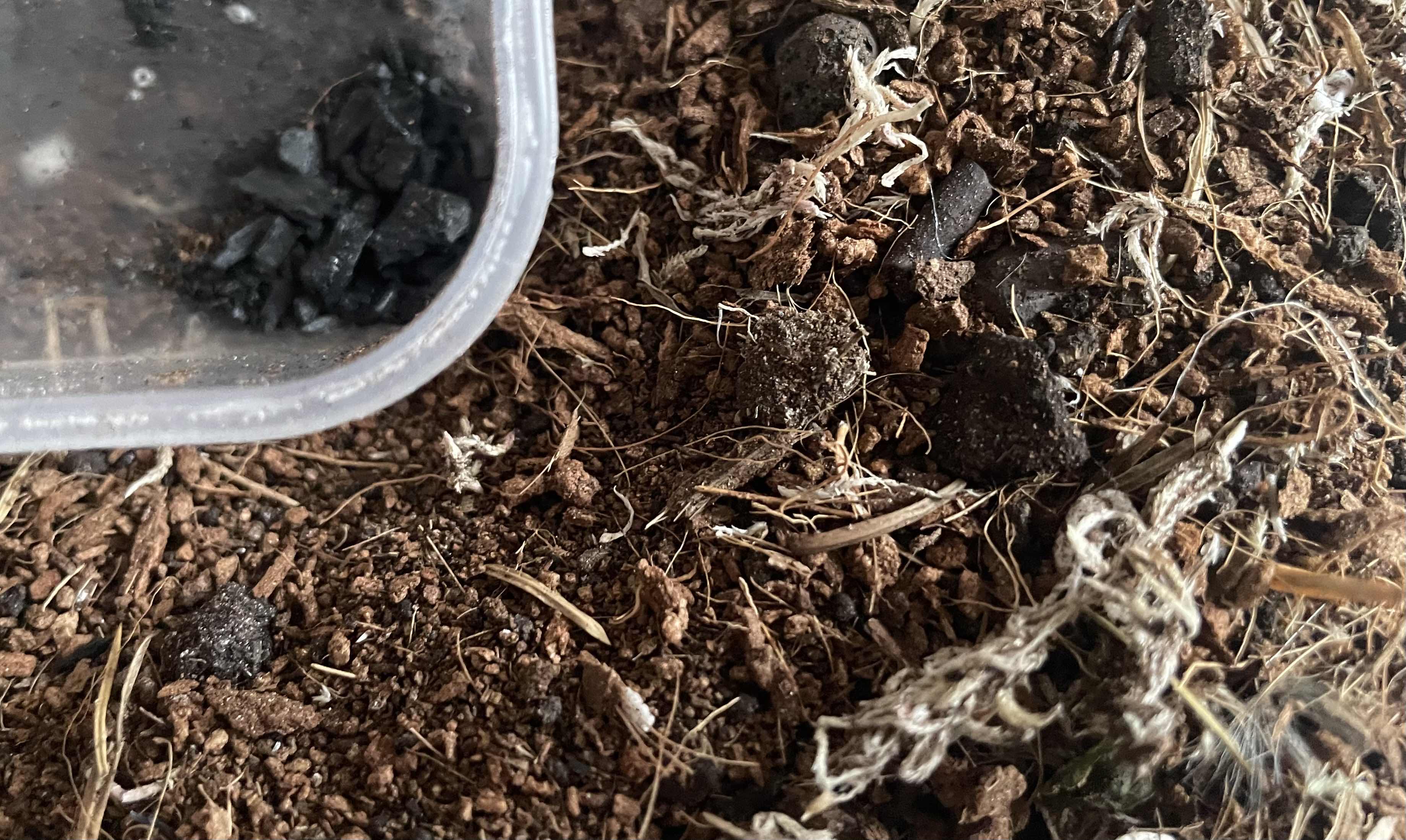
➼ Lots of people have very different opinions about how much function the entire bulk of the substrate should have. Coco coir, for example, has zero nutritional value to isopods so should not be a main component. If you have a rich substrate otherwise, then I think it's perfectly fine to use non-nutritional substances to bulk up your substrate a bit. Coco coir is very good for retaining moisture and being mould resistant!
➼ Other people have used potting soil/top soil/black earth soil! You can use leaf mulch, orchid bark, leca clay balls, etc to bulk it out a bit too.
-
➼ Essential if you want to plant any live plants in the enclosure.
➼ I think it just makes sense to have at the bottom. Your moss shouldn't be sopping wet, but if it is, then having a place for the water to go... Well, it doesn't really change anything for the moss, but I like to think my isopods enjoy them (they like to nestle amongst the drainage layer in the moss section).

-
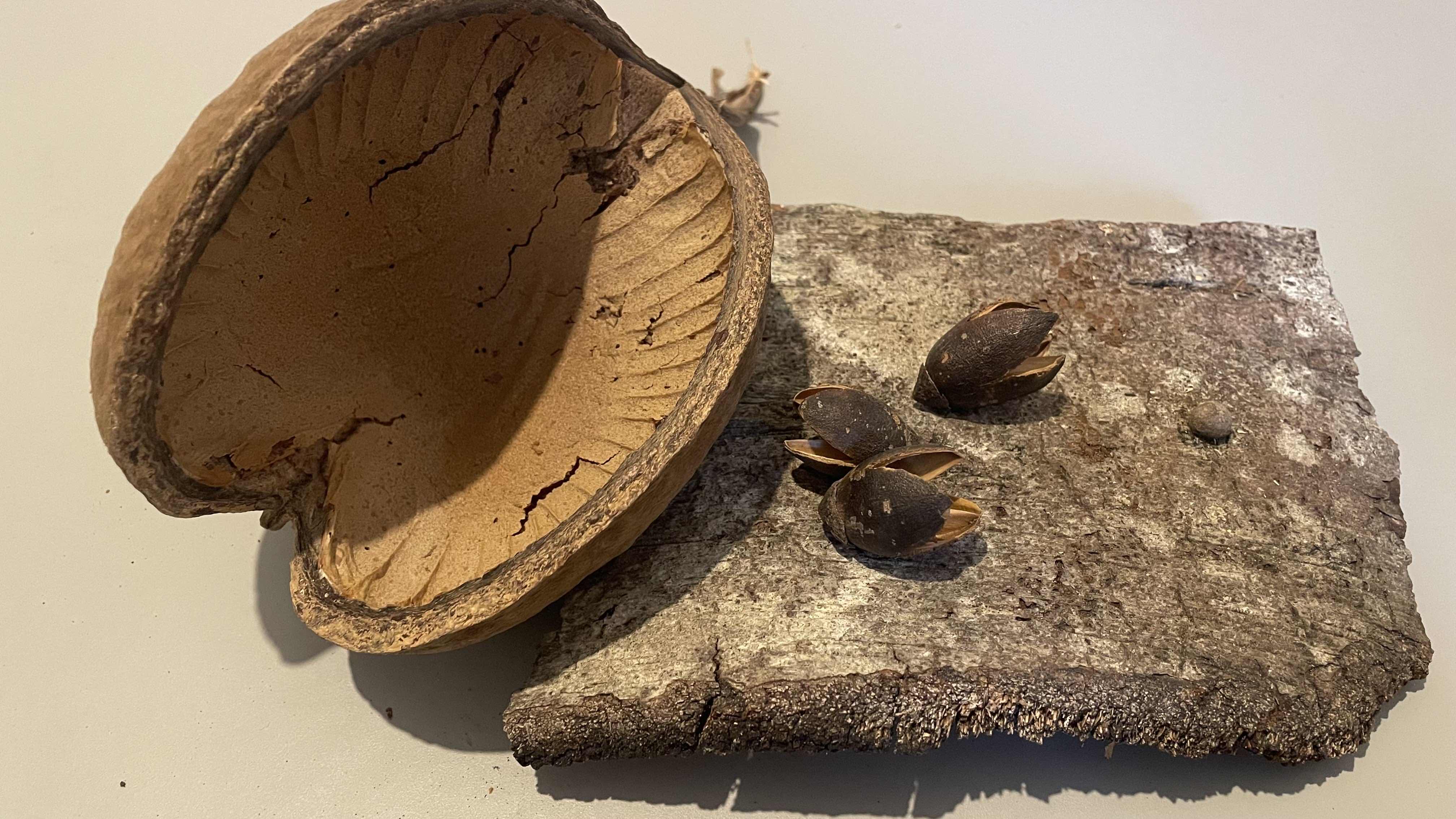
➼ Isopods need places to hide in order to feel safe. As your colony grows, the more surface area there is, the more real estate! Usually people use cork bark, but I bought some oak bark as well. You can use driftwood, and other climable surfaces as these Porcellio love to explore. They'll climb verticle surfaces too.
-
➼ You can go forage for sticks, just make sure to boil and dry them! Or some other method of sanitising. No greenwood because the sap can trap them.
➼ Lotus pods, Dried Seed pods, Dried flower pods, etc.

Other Foodstuff: Check mould/bacteria build-up prevention + frequency
-
➼ Bee Pollen, Dried Shrimp, Dried Minnows, Dried Sprats, Insect Granules, Spirulina Wafers/Powder, Brewer's Yeast, Fish Flakes, Fish food.
➼ Generally recommended that you avoid Fish food/sticks that contain flours due to potential problems with mites.
-
➼ In Advanced Higher Biology, our department isopods were fed on potatoes. I would definitely have a look to see if they would benefit from donations from your food scraps!
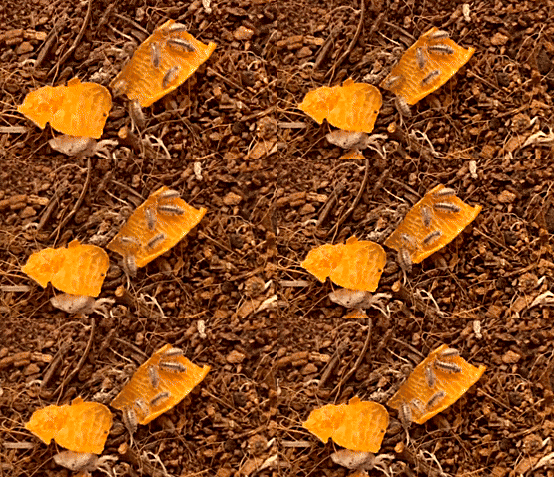
➼ My dairy cows quite like carrots :) Or at least the small ones do!
-
➼ Unnecessary but helpful if you don't want to think about feeding too much/you want to really optimise breeding.
Should I buy or Forage?
Foraging for your own leaf litter, sticks, etc is a good way to save money. If you are foraging please consider:
Shops
Here is a list of shops that I have used in the UK. I will separate Online and Local.
Online:
Dundee:
Glasgow:
Edinburgh:
BELOW: Still a work in progress. Still some good info where it exists :)
How do I set up the Enclosure?
This is where I really recommend watching Desktop Jungle's Isopod Enclosure Guide. Happily, he has created video chapters, so enjoy whatever sections you want conveniently. But: If you wish to continue on with my (mostly text) guide, then feel free to stick around!
Pre-preparation.
-
➼ I usually soak the spaghnum moss that I'm using overnight in distilled water to get rid of any tiny little organisms that might not be so friendly to our pods. I would submerge this entirely.
➼ Anything you wish to sterilise should either be boiled in a pot (5-10 minutes), or chucked in a freezer for about 72 hours. You should sterilise leaf litter as your closed-system does not have the ability to control dangerous fauna to your isopods, nor can your isopods get away from danger.
➼ All boiled should be dried. Frozen items should be dried (if necessary), and brought back to room temperature if you are going to move your pods in soon after.
➼ Leca clay balls can be washed to get rid of the dust on them. I'm not sure if this is beneficial.
1. Drill/Poke holes into the container.
-
➼ If you are going to be using a hot needle, then just be mindful of the fact that ALL of the needle will get very hot. Get a firm grasp on it with some pliers. That being said, unless you have some truly huge needles or significant patience I'd recommend against this method.
➼ I find it makes the most sense to drill very large holes/cut large holes and then lay the webbing/mesh over those, securing it with hot glue. If you're thinking of using a stanley knife or similar to cut large rectangles, then just be warned that plastic can be VERY brittle. Maybe if you heated up the blade a bit? Genuinely do not listen to me about this kind of thing. I melted beeswax in a ladle over a candle flame for like several months.
➼ Postpods has a really nice listing of screw in airvents that you can read the instructions for, when it comes to all aspects of set-up.
2. Wipe down everything.
-
➼ Self-explanatory. You can choose to sanitise if you wish, my tool of choice for that usually is 70% IPA. But just water works, unless you have any reason to believe your equipment is contaminated with something.
There will be a designated "Dry" and "Wet" end of the enclosure so that your isopods can self-regulate exactly how moist they are. I like to keep my Wet end at the left and Dry end at the right.
3. Spaghnum Moss +/- Drainage
-
➼ Drainage: Lay down about an 1 inch of leca clay balls at the wet
Maintenance
Handling?
Like millipedes, isopods do NOT benefit from any handling interactions. Our natural body heat dries them out faster, putting them at risk of suffocation, even super gentle handling can crush or injure fragile pods, and the interaction just stresses them out. Unfortunately, they do not get used to our presence, unlike certain individuals in jumping spider and mantis species.
You should be able to handle them when necessary, however. Avoiding touching them is always the better option - luring them onto a slice of vegetable, using a brush to gently guide/move them to the right place... do not use metal tweezers, or any tweezers really, as this can crush them. Different species have different tolerances, I'm aware that armadillium species can sometimes be calm when handled? But pay attention to the movements and comfort of the insect. Isopods, unfortunately, are 'look don't touch' pets.
Be aware that these dairy cows MOVE (moo-ve :3), so have a catch cup or something similar at hand. They are sprinters when they are startled. Sudden light changes scare them, and so does bright light in general.
Moulting
Isopods do not tend to like being disturbed, handling tends to stress them out: but especially in the molting phase they are very fragile do NOT touch them or disturb them.
Image courtesy of this Reddit Post.